
Nylon Rod Price in India Complete Buying Guide
Introduction
At Vansh Global | Krishna All Plastic, we are a trusted manufacturer, supplier, stockist, and exporter of premium-quality engineering plastic rods, sheets, bushes, gears, wear pads, and precision-machined components. With years of industry expertise and a commitment to qualityWith years of industry expertise and a commitment to quality, we provide high-performance plastic solutions designed to meet the demanding requirements of modern industries.
Nylon rods are widely used in engineering, manufacturing, automotive, electrical, machinery, and industrial applications because of their excellent strength, low weight, wear resistance, and smooth performance. If you are planning to purchase nylon rods, one of the first questions you may have is: What is the Nylon Rod Price in India When a combination of strength, low weight, wear resistance, and ease of machining is needed, nylon rods are frequently utilised in engineering, manufacturing, machinery, fabrication, and industrial applications. They can be offered in various diameters, lengths, colours, and requirements and are often made of Nylon 6 and comparable engineering-plastic grades.
The price of a nylon rod depends on several factors, including the type of nylon, diameter, length, grade, manufacturing process, quantity, and supplier. This complete buying guide explains the important factors that affect nylon rod prices and helps buyers choose the right product for their requirements.
What Is a Nylon Rod
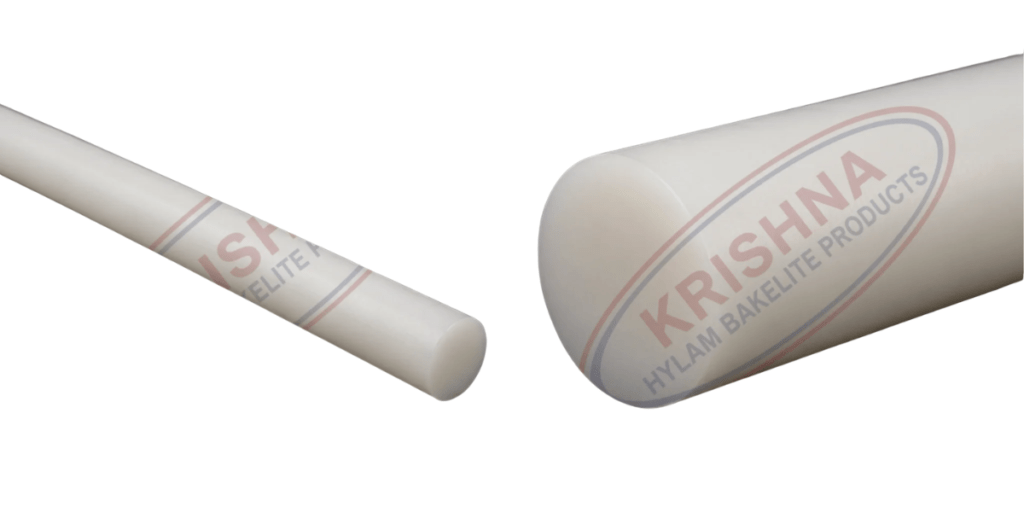
A nylon rod is a cylindrical engineering plastic product manufactured from nylon polymers. It is known for its combination of mechanical strength, toughness, abrasion resistance, and low friction. Different grades of nylon are available for different industrial requirements. Choosing the correct grade is important because it can affect both product performance and the overall Nylon Rod Price in India.
Nylon rods can be machined into different components such as bushes, rollers, gears, spacers, bearings, pulleys, guides, wear strips, and other customised parts. They are available in different sizes and grades to meet various industrial requirements.
Why Choose Krishna All Plastic
1. Excellent Wear Resistance
- Nylon has good resistance to abrasion and wear, making it suitable for components that experience continuous movement or friction. Bushes, rollers, gears, guide components, and wear pads can benefit from this property. For machinery operating continuously, choosing a material with suitable wear characteristics can help reduce frequent component replacement and maintenance.
2. Lightweight Construction
- One of the major advantages of nylon is its relatively low density compared with many metals. This makes nylon components easier to handle and can reduce the weight of moving assemblies. Lightweight components can be particularly useful in conveyors, automation equipment, packaging machinery, material-handling systems, and other mechanical applications.
3. Good Mechanical Strength
- Nylon rods provide a useful balance of strength, toughness, and flexibility. Nylon 66, for example, has higher stiffness and strength characteristics than standard Nylon 6 in many applications. A published Nylon 66 stock-shape datasheet reports tensile strength of 83 MPa at 23°C under its specified test conditions. The actual performance depends on grade, moisture condition, temperature, processing method, and design.
4. Good Impact Resistance
- Nylon is capable of absorbing mechanical shocks, making it useful where components experience impact or intermittent loading. This can be beneficial for machine components such as gears, rollers, guide parts, bushes, and other fabricated engineering components.
5. Corrosion Resistance
- Unlike steel and other metals, nylon does not rust. This makes nylon rods attractive for applications where corrosion from moisture or environmental exposure is a concern. However, chemical compatibility should always be checked for the exact operating environment because different nylon grades behave differently with chemicals.
6. Electrical Insulation
- Nylon is a non-metallic material and can provide electrical insulation in suitable applications. Nylon rods may therefore be machined into insulating bushes, spacers, supports, and other electrical components.
7. Easy Machining
- Nylon rods can generally be machined using conventional workshop equipment. They can be turned, drilled, cut, milled, and shaped into customized components. This allows manufacturers to purchase standard rod sizes and machine them according to their drawing or application requirements.
8. Lower Noise During Operation
- Nylon components can produce less operating noise than some metal components when used in suitable moving or contacting applications. This is one reason nylon gears, rollers, guides, and bushes are used in various machines.
9. Good Chemical Resistance
- Nylon provides useful resistance to many oils, fuels, solvents, and chemicals, although the exact resistance depends on the chemical, concentration, temperature, exposure duration, and nylon grade. Therefore, chemical compatibility should be checked before selecting nylon for aggressive environments.
10. Cost-Effective Engineering Material
- Nylon can provide a practical combination of performance and cost. It is often selected when a component does not require the weight, corrosion characteristics, or cost associated with certain metal alternatives.
Applications of Nylon Rod
1. Gears and Sprockets
- Nylon rods can be machined into gears, sprockets, timing components, and other rotating parts. Their good wear characteristics and ability to reduce operating noise make them suitable for machinery where smooth movement is required. Nylon gears can also be lighter than metal gears, helping reduce the overall weight of mechanical assemblies.
2. Bushes and Bearings
- One of the most common applications of nylon rods is manufacturing bushes, sleeves, and bearing components. Nylon’s relatively low friction and good wear resistance make it suitable for sliding and rotating applications. They can be useful in applications where regular lubrication is difficult or where a lightweight bearing material is preferred.
3. Rollers and Wheels
- Nylon rods can be machined into rollers, wheels, guide rollers, and support wheels. These components are used in conveyors, material-handling systems, packaging machinery, textile machinery, and other industrial equipment.
4. Wear Pads and Wear Strips
- Nylon is frequently selected for wear pads, guide strips, slideways, liners, and other components exposed to continuous movement and friction. Its abrasion resistance helps extend component service life.
5. Pulleys and Sheaves
- Nylon rods are also used to manufacture pulleys, sheaves, rope guides, and similar components. Their lightweight nature can be an advantage where reducing component weight is important.
6. Conveyor Components
- Industrial conveyors use several nylon components, including rollers, bushes, guide wheels, wear strips, spacers, and other machined parts. Nylon can help reduce noise and friction in moving assemblies.
7. Textile Machinery
- The textile industry uses nylon components for loom parts, rollers, cams, cam followers, gears, bearings, and other machine components. Indian nylon product suppliers specifically list textile machinery among the major application areas.
8. Automobile Components
- Nylon rods can be machined into bushes, wear rings, spacers, guide components, rollers, and other automobile parts. They are useful where low weight, wear resistance, and corrosion resistance are required.
9. Food Processing Machinery
- Suitable food-contact grades of nylon are available for applications requiring appropriate regulatory compliance. Depending on the selected grade and certification, nylon can be used for rollers, guides, star wheels, timing screws, and other food-processing machinery components.
10. Chemical and Industrial Equipment
- Nylon provides resistance to many oils, greases, fuels, and certain chemicals, making selected grades useful for industrial equipment. However, chemical compatibility should always be checked against the exact chemical, concentration, temperature, and exposure conditions before selection.
Specification Table of Nylon Rod
| Specification | Details |
|---|---|
| Material | Nylon Rod |
| Product Name | Nylon / Polyamide |
| Available Grades | Nylon 6, Nylon 66, Cast Nylon, Oil-Filled Nylon |
| Shape | Round Rod |
| Diameter Range | 5 mm to 500 mm* |
| Length | 500 mm, 1000 mm, 2000 mm, 3000 mm* |
| Colour | Natural, White, Black, Blue, Green and Custom Colours |
| Density | Approx. 1.13–1.15 g/cm³ |
| Tensile Strength | Approx. 60–80 MPa* |
| Working Temperature | Approx. -40°C to +100°C* |
| Hardness | Approx. 75–90 Shore D* |
| Water Absorption | Moderate |
| Surface Finish | Smooth / Machined Finish |
| Electrical Properties | Good Electrical Insulation |
| Chemical Resistance | Good Resistance to Oils, Greases and Many Chemicals |
| Key Features | Lightweight, High Strength, Wear Resistant, Low Friction, Durable |
| Applications | Gears, Bushes, Rollers, Bearings, Wheels, Pulleys, Guides and Industrial Components |
| Customization | Custom Diameter, Length, Grade and Colour Available |
| Packaging | Plastic Wrapped / Wooden Crate / As Per Customer Requirement |
Benefits of Nylon Rod
1. Excellent Strength and Toughness
- One of the major benefits of Nylon Rod is its combination of strength and toughness. Nylon can withstand mechanical loads, repeated movement, and impact without easily cracking or breaking. This makes it suitable for industrial components that operate continuously under mechanical stress. Nylon rods are frequently machined into gears, bushes, rollers, pulleys, bearing components, and wear pads. Their mechanical properties make them a practical alternative to several conventional materials in appropriate applications.
2. High Wear and Abrasion Resistance
- Nylon has excellent resistance to wear and abrasion. Components manufactured from nylon can perform effectively where two surfaces repeatedly come into contact or where sliding movement takes place. The wear-resistant nature of nylon can help increase component service life and reduce the frequency of replacement.
3. Low Friction
- Nylon offers relatively low-friction performance, making it useful for moving and sliding components. In suitable applications, nylon can reduce friction between mating surfaces and contribute to smoother machine operation. Its bearing and wear characteristics are among the reasons nylon is commonly selected as a replacement for certain metal bearings and bushings.
4. Lightweight Alternative to Metal
- Another important advantage is its low weight compared with many metals. Nylon is significantly lighter than materials such as bronze, cast iron, and aluminium. One PA66 rod datasheet, for example, describes nylon as approximately one-eighth the weight of bronze, one-seventh the weight of cast iron, and about half the weight of aluminium. This makes Nylon Rod useful when manufacturers want to reduce the weight of machine components without compromising the required performance.
5. Excellent Machinability
- Nylon Rod can be machined using conventional equipment and suitable cutting tools. It can be cut, drilled, turned, milled, bored, and shaped according to component requirements. This makes nylon particularly useful for manufacturers producing customized components in small or large quantities.
6. Good Impact Resistance
- Nylon is known for its toughness and impact resistance. This allows components to withstand sudden loads and mechanical shocks better than many ordinary plastics. For machinery operating under repeated impact, vibration, or movement, selecting the appropriate nylon grade can help provide reliable component performance.
7. Good Chemical Resistance
- Nylon provides resistance to many oils, greases, fuels, and chemicals, although its exact chemical resistance depends on the nylon grade and operating environment. This makes Nylon Rod suitable for several industrial applications where components may come into contact with lubricants or industrial fluids. However, buyers should always check chemical compatibility before selecting nylon for aggressive chemical environments.
8. Noise Reduction
- Nylon can help reduce operating noise compared with certain metal components. This is particularly beneficial for gears, rollers, guides, and other moving machine parts. When nylon components replace suitable metal components, the resulting assembly can provide quieter operation and reduced vibration in appropriate applications.
9. Corrosion Resistance
- Unlike conventional steel and other ferrous metals, nylon does not rust. This is a major benefit for applications where exposure to moisture or corrosive environments is a concern. Nylon can therefore be considered for components used in industrial environments where corrosion resistance is important.
Types of Nylon Rods
1. Nylon 6 Rod
Nylon 6 rods are commonly used engineering plastic rods known for good mechanical strength, toughness, and wear resistance. They are suitable for general-purpose industrial components.
- Bushes
- Rollers
- Gears
- Spacers
- Guide components
- Machine parts
2. Nylon 66 Rod
Nylon 66 rods are engineered for applications requiring higher mechanical performance and better resistance to heat compared with many general-purpose nylon grades.
- Automotive components
- Industrial machinery parts
- Gears
- Bearings
- Rollers
- Mechanical components
3. Cast Nylon Rod
Cast nylon rods are produced through a casting process and are widely used for heavy-duty engineering applications. They are available in larger dimensions and can provide good wear resistance and machinability.
- Large bushes
- Gears
- Wheels
- Pulleys
- Wear pads
- Heavy machinery components
4. Oil-Filled Nylon Rod
Oil-filled nylon rods are designed to provide improved self-lubricating characteristics. They can be useful in applications where regular lubrication is difficult or where reduced friction is required.
- Bearings
- Bushes
- Sliding components
- Wear strips
- Industrial machinery
5. Glass-Filled Nylon Rod
Glass-filled nylon rods contain reinforcing glass fibres to improve specific mechanical properties. They are selected for applications requiring greater rigidity, strength, or dimensional stability.
- Engineering components
- Structural machine parts
- Automotive components
- Industrial equipment
- High-load applications
Conclusion
Nylon rods are versatile engineering plastic products used in machinery, automotive, packaging, electrical, textile, and many other industries. Their lightweight construction, wear resistance, low friction, impact resistance, corrosion resistance, and easy machinability make them a practical choice for many applications.
The Nylon Rod Price in India depends on several factors, including material grade, dimensions, quantity, tolerance, finish, and customisation. Standard Nylon 6, Nylon 66, cast nylon, oil-filled nylon, and glass-filled nylon rods are available for different performance requirements.