
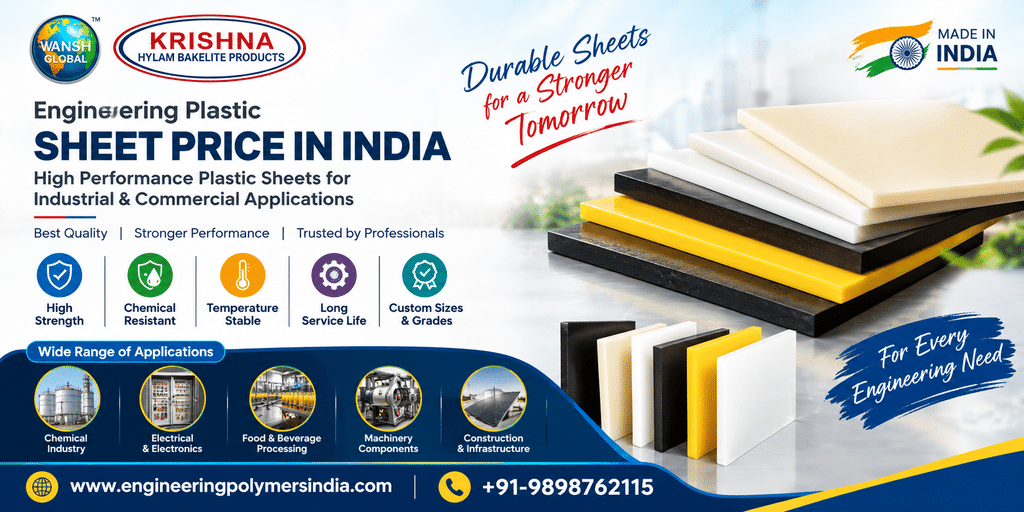
Engineering Plastic Sheet Price in India
Introduction
At Vansh Global | Krishna All Plastic, we are a trusted manufacturer, supplier, stockist, and exporter of premium-quality engineering plastic rods, sheets, bushes, gears, wear pads, and precision-machined components. With years of industry expertise and a commitment to qualityWith years of industry expertise and a commitment to quality, we provide high-performance plastic solutions designed to meet the demanding requirements of modern industries.
Engineering plastic sheets are widely used in modern industries because of their strength, durability, lightweight properties, and resistance to wear. These sheets are used in manufacturing, construction, electrical applications, automotive components, packaging, and many other industrial sectors. Businesses looking for reliable plastic materials often search for Engineering Plastic Sheet Price in India to find suitable products at competitive rates.
The price of engineering plastic sheets depends on several factors, including the type of plastic, sheet thickness, dimensions, quality, and quantity required. Understanding these factors helps buyers select the right material according to their application and budget.
Krishna All Plastic is a company to consider when sourcing plastic sheet solutions for industrial and commercial requirements. Choosing the right engineering plastic sheet can help businesses improve product performance, reduce maintenance needs, and achieve long-term value.
What Are Engineering Plastic Sheets
Engineering plastic sheets are specially manufactured plastic materials designed for applications that require better mechanical strength, dimensional stability, and resistance to chemicals or moisture than many standard plastics.
These sheets are valued for their easy machining, corrosion resistance, and ability to perform in demanding working conditions. Depending on the material, they may also offer good wear resistance, electrical insulation, low friction, or resistance to moisture and chemicals.
Engineering plastics are commonly selected for applications where metal parts may be too heavy, vulnerable to corrosion, or expensive to manufacture. They can also be useful when electrical insulation, low friction, or resistance to moisture is required.
Engineering Plastic Sheet Price in India
The Engineering Plastic Sheet Price in India varies according to the material and product specifications. There is no single price that applies to every engineering plastic sheet because different materials offer different performance characteristics.
- Material type: Different plastics, such as nylon, POM, HDPE, and UHMWPE, have different costs and properties.
- Thickness: Thicker sheets generally require more raw material and may cost more per sheet.
- Sheet dimensions: Larger sheets usually require more material, affecting the overall price.
- Grade and quality: Virgin material, specialised grades, and specific performance requirements can influence the cost.
- Quantity: Bulk purchases may offer better commercial pricing, depending on the supplier.
- Customisation: Cutting, machining, special colours, and non-standard dimensions can add to the total cost.
- Transportation: Delivery location, packaging, and shipping requirements may affect the final expense.
For an accurate quotation, buyers should share the required material grade, thickness, length, width, quantity, and intended application with their supplier.
Types of Engineering Plastic Sheets
1. Nylon Plastic Sheets
Nylon sheets are known for their strength, toughness, and wear resistance. They are commonly used to manufacture gears, bushes, rollers, bearings, and machine components. Nylon is a suitable choice for applications that involve friction and mechanical loads, although moisture absorption should be considered during material selection.
2. HDPE Plastic Sheets
High-Density Polyethene (HDPE) sheets are lightweight, durable, and resistant to many chemicals. They are widely used in storage tanks, industrial linings, cutting surfaces, and fabrication work. HDPE is often considered when buyers need a practical material for general industrial applications.
3. UHMWPE Plastic Sheets
Ultra-High-Molecular-Weight Polyethene (UHMWPE) sheets offer excellent abrasion resistance, low friction, and good impact strength. They are suitable for conveyor systems, chute liners, guide rails, and wear strips. These sheets help reduce friction in applications where materials slide across a surface.
4. PTFE Plastic Sheets
PTFE sheets are valued for their low friction and strong resistance to many chemicals. They are used in seals, gaskets, insulation, chemical-processing equipment, and sliding components. Special grades may be selected for demanding operating conditions, depending on temperature, pressure, and load requirements.
5. POM or Acetal Plastic Sheets
Polyoxymethylene (POM), also called acetal, is suitable for precision engineering components. It offers good dimensional stability, stiffness, and low friction. Common applications include gears, rollers, valve components, and machine parts that require accurate dimensions.
6. Polycarbonate Plastic Sheets
Polycarbonate sheets are known for their high impact resistance and transparency. They are used for machine guards, protective covers, safety glazing, electrical enclosures, and industrial partitions. They are a useful option when visibility and impact resistance are important.
Applications of Engineering Plastic Sheets
1. Industrial Machinery and Equipment
Engineering plastic sheets are used to manufacture machine components, protective covers, sliding parts, and wear plates. Materials such as nylon and UHMWPE are useful in applications that require strength and low friction.
These sheets help reduce metal-to-metal contact and can support smooth machine operation. They are commonly used in manufacturing plants, workshops, and industrial processing units.
2. Automotive Industry
The automotive industry uses engineering plastics to manufacture lightweight components, protective panels, bushings, spacers, and insulation parts. These materials can help reduce component weight while maintaining the required mechanical performance.
The price of engineering plastic sheets varies according to the material grade and the specific requirements of the automotive application.
3. Electrical and Electronic Applications
Some engineering plastic sheets provide good electrical insulation and are suitable for electrical panels, equipment covers, insulation supports, and protective components.
Materials such as polycarbonate and certain grades of POM are selected according to the operating environment, temperature, and electrical requirements. Buyers should check the technical specifications before selecting a material.
4. Chemical Processing Industry
Engineering plastic sheets are used in chemical tanks, protective linings, machine parts, and equipment components that may come into contact with chemicals.
PTFE and certain HDPE grades are preferred for specific chemical-resistant applications. However, chemical compatibility depends on the chemical concentration, temperature, and exposure time.
5. Food Processing and Packaging
Engineering plastic materials are used for conveyor guides, cutting surfaces, machine components, and sliding parts in food processing facilities.
UHMWPE and other suitable grades can offer low friction and easy maintenance. For direct food contact, buyers should select materials with the appropriate food-contact compliance documentation.
6. Construction and Building Applications
Engineering plastic sheets are used in protective panels, insulation components, partitions, fabrication work, and selected structural applications.
Polycarbonate sheets are often chosen where impact resistance and light transmission are important, while HDPE sheets may be suitable for moisture-resistant components. The material should be selected according to the project’s load and environmental conditions.
7. Agriculture and Irrigation Equipment
Agricultural equipment manufacturers use engineering plastics for protective covers, machine guides, water-handling components, and wear-resistant parts.
HDPE sheets are especially useful in selected applications because of their moisture resistance and durability. They can be used in equipment exposed to outdoor conditions when the grade is suitable for the environment.
8. Conveyor Systems and Material Handling
Engineering plastic sheets are widely used to manufacture conveyor guides, wear strips, rollers, sliding pads, and material-handling components.
UHMWPE is often selected for applications requiring low friction and high abrasion resistance. It can help reduce wear in systems that handle cartons, industrial products, and bulk materials.
9. Manufacturing and Fabrication
Fabrication companies use engineering plastic sheets for CNC-machined components, custom parts, templates, jigs, fixtures, and equipment housings.
The availability of different thicknesses and grades allows manufacturers to select materials according to their design requirements. Machinability, dimensional stability, and operating temperature should be considered before purchasing.
10. Medical and Laboratory Equipment
Selected engineering plastics are used in laboratory equipment housings, instrument components, protective panels, and specialised equipment parts.
The appropriate grade depends on the application’s hygiene, chemical exposure, temperature, and regulatory requirements. Medical or laboratory use may require additional certification and material traceability.
Benefits of Engineering Plastic Sheets
1. High Strength and Durability
One of the main benefits of engineering plastic sheets is their strength and durability. Depending on the material grade, these sheets can withstand mechanical stress, regular use, and impact. They are suitable for applications where ordinary plastic materials may not provide the required performance.
Materials such as nylon, polycarbonate, HDPE, and other engineering-grade plastics offer different levels of strength and impact resistance. Choosing the right material helps ensure reliable performance in industrial environments.
2. Lightweight and Easy to Handle
Engineering plastic sheets are generally lighter than many metal alternatives. Their lower weight makes transportation, handling, cutting, and installation easier.
This benefit is particularly useful for manufacturers that need to produce machine components, protective panels, equipment covers, and lightweight structures. Reduced material weight can also help simplify assembly and handling processes.
3. Excellent Corrosion Resistance
Unlike iron and steel, engineering plastic sheets do not rust in the conventional way. Many grades offer good resistance to moisture, helping them perform in humid environments and applications where metal corrosion is a concern.
Depending on the selected polymer, they may also resist certain chemicals, oils, and cleaning agents. However, chemical compatibility should always be checked before selecting a sheet for demanding industrial applications.
4. Low Maintenance Requirements
Another important advantage is their potential to reduce maintenance requirements. Suitable engineering plastics can provide good resistance to wear, moisture, and corrosion, depending on the operating conditions.
When the correct material is selected, businesses may experience fewer replacements and less maintenance downtime. This makes engineering plastic sheets a useful option for machinery, manufacturing equipment, and industrial installations.
5. Cost-Effective Industrial Solution
The Engineering Plastic Sheet Price in India depends on several factors, including the polymer type, thickness, sheet dimensions, grade, and order quantity.
Although some engineering plastics have a higher initial price than ordinary plastics, they can provide better value through improved durability, easier processing, and reduced maintenance costs.
6. Good Electrical Insulation
Several engineering plastic materials offer useful electrical insulation properties. They are often selected for electrical panels, insulating supports, component housings, and protective barriers.
The actual insulation performance depends on the plastic type, temperature, moisture exposure, and operating voltage. Buyers should check the technical specifications when selecting a sheet for electrical applications.
7. Easy Machining and Fabrication
Engineering plastic sheets can be cut, drilled, shaped, milled, and machined into different components. This flexibility allows manufacturers to create parts according to their required dimensions and designs.
Materials such as POM and nylon are commonly used for precision-machined components. Easy processing can help manufacturers improve production efficiency and reduce material waste when the correct machining methods are used.
8. Reduced Maintenance Requirements
Engineering plastic sheets can help reduce maintenance in applications where corrosion, friction, and material wear are important concerns. Selecting the correct grade may reduce the need for frequent replacements and repairs.
The result depends on the application, loading conditions, operating temperature, and installation quality. Proper material selection is essential to achieve these benefits.
9. Excellent Machining and Fabrication Flexibility
Engineering plastic sheets can be cut, drilled, shaped, and machined into components according to specific requirements. Depending on the material, they can be processed using conventional fabrication methods or precision CNC machining.
This flexibility helps manufacturers create customised parts for different industrial applications. It also allows businesses to select suitable dimensions and thicknesses rather than purchasing unnecessarily large or heavy components.
Why Choose Krishna All Plastic
1. High-Quality Materials at Competitive Prices
When searching for engineering plastic sheets in India, buyers should focus on both product quality and price. Different materials, such as HDPE, PP, Nylon, PTFE, Delrin (POM), PVC, and Hylam, have different properties and costs. Selecting the right material for your application helps you control expenses while maintaining dependable performance.
2. Wide Range of Engineering Plastic Sheets
Every industrial application has different requirements. Some applications need chemical resistance, while others require high strength, dimensional stability, electrical insulation, or low friction. Choosing a supplier that offers multiple engineering plastic materials makes it easier to find a suitable solution.
3. Durable and Long-Lasting Performance
Engineering plastic sheets are used in applications where ordinary materials may not provide the required performance. Depending on the grade, they can offer excellent wear resistance, impact resistance, chemical resistance, and moisture resistance. Selecting the appropriate sheet can help reduce frequent replacement and maintenance expenses.
4. Custom Sizes and Thickness Options
Sheet thickness, dimensions, grade, and quantity directly influence the final purchase price. Buyers should confirm their required measurements before placing an order. Custom-cut sheets can also help reduce material wastage and simplify fabrication. Krishna All Plastic provides various sheet sizes and thickness options, along with custom sizing support for suitable products.
5. Resistance to Chemicals and Moisture
Some engineering plastics offer strong resistance to water, oils, chemicals, and corrosive environments. This makes them useful in chemical-processing equipment, industrial machinery, fluid-handling systems, and manufacturing units. However, resistance varies by polymer and chemical, so buyers should confirm compatibility before choosing a sheet.
6. Easy Machining and Fabrication
Many engineering plastic sheets can be cut, drilled, milled, turned, or machined into components of different shapes and sizes. This flexibility makes them suitable for custom industrial parts, machine guards, precision components, and replacement parts. The appropriate grade and machining method help achieve the required dimensions and surface finish.
7. Cost-Effective Long-Term Performance
The lowest purchase price does not always mean the lowest overall cost. A suitable engineering plastic sheet can provide a longer service life, reduce maintenance requirements, and limit equipment downtime. Buyers should compare material price, expected durability, machining costs, and replacement frequency before making a final decision.
8. Lightweight and Easy to Handle
Compared with many metal alternatives, engineering plastic sheets are lightweight and can be easier to transport, cut, machine, and install. This can help reduce handling effort and simplify manufacturing processes. Their lower weight is especially useful when designing components where reducing overall product weight is important.
Frequently Asked Questions (FAQs)
1. What is the Engineering Plastic Sheet Price in India
The price depends on the plastic material, grade, thickness, dimensions, quantity, and supplier. Buyers should request a quotation based on their exact specifications.
2. Which types of engineering plastic sheets are commonly used
Common options include nylon, HDPE, UHMWPE, POM (acetal, and polypropylene sheets. Each material has different properties and applications.
3. Which engineering plastic sheet is best for industrial use
The best option depends on the application. Nylon may suit certain mechanical parts, UHMWPE is useful for wear-resistant applications, and HDPE is often selected for chemical and moisture resistance.
4. Does sheet thickness affect the price
Yes. Thicker sheets generally use more raw material and may have a higher total price than thinner sheets of the same material and grade.
5. Can engineering plastic sheets be cut to size
Many engineering plastic sheets can be cut or machined to meet project requirements. Availability and additional charges depend on the supplier and the requested dimensions.
6. Are engineering plastic sheets better than metal sheets
Not in every situation. Plastics may offer lower weight, corrosion resistance, and low friction, while metals may be more suitable for applications requiring high stiffness, strength, or heat resistance.
7. How can I get a quotation from Krishna All Plastic
Share your required plastic type, sheet thickness, dimensions, quantity, and intended application with Krishna All Plastic. Confirm the current availability, specifications, and delivery terms before ordering.
8. What should I check before buying engineering plastic sheets
Check the material grade, dimensions, thickness, operating temperature, chemical compatibility, mechanical requirements, and total delivered cost before placing an order.
Conclusion
The Engineering Plastic Sheet Price in India depends on several factors, including material type, thickness, sheet size, grade, order quantity, and customisation. Nylon, HDPE, UHMWPE, POM, and polypropylene sheets each offer different advantages, making material selection essential for industrial performance.
Krishna All Plastic can be considered when exploring engineering plastic sheet options for industrial and commercial projects. Contact the company with your required material, dimensions, thickness, and quantity to discuss availability and obtain a quotation suited to your needs.